Every job below is one we do ourselves across Seattle.
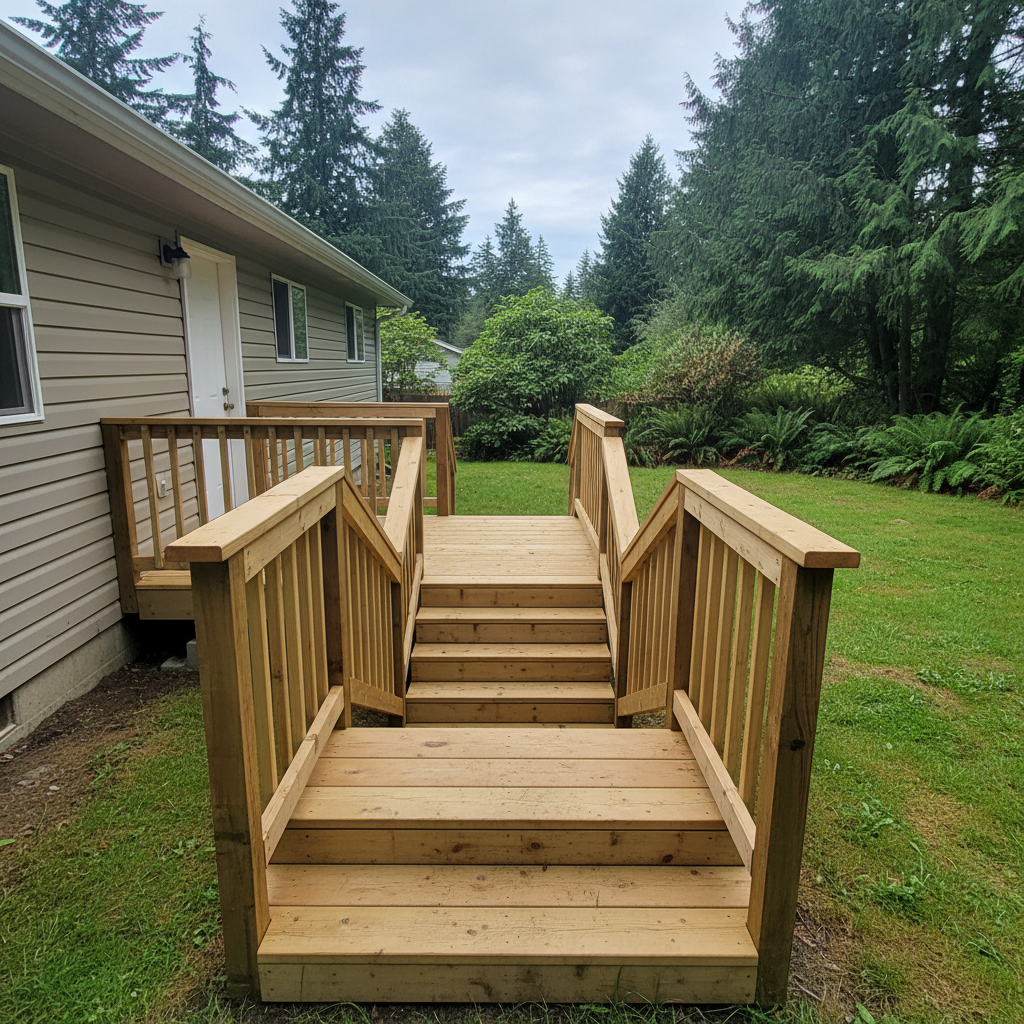
We build new decks from the footings up, sized to span tables for your joist spacing and species of lumber. We set footings below the local frost line and have them inspected before framing continues on top. Most ground-level decks take about a week; multi-level decks with stairs run longer.
We fix sagging joists, rotted ledger boards, and stairs that have started to pull away from the house. Sometimes it's one bad board, sometimes the whole frame needs sistering with new lumber. We'll tell you which one it is before we start cutting anything.
Cedar and pressure-treated lumber both need a fresh coat every two to three years in this climate, or the wood grays and starts to check. We pressure wash first, let the boards dry for a day or two, then apply a penetrating stain rather than a film-forming finish that'll just peel.
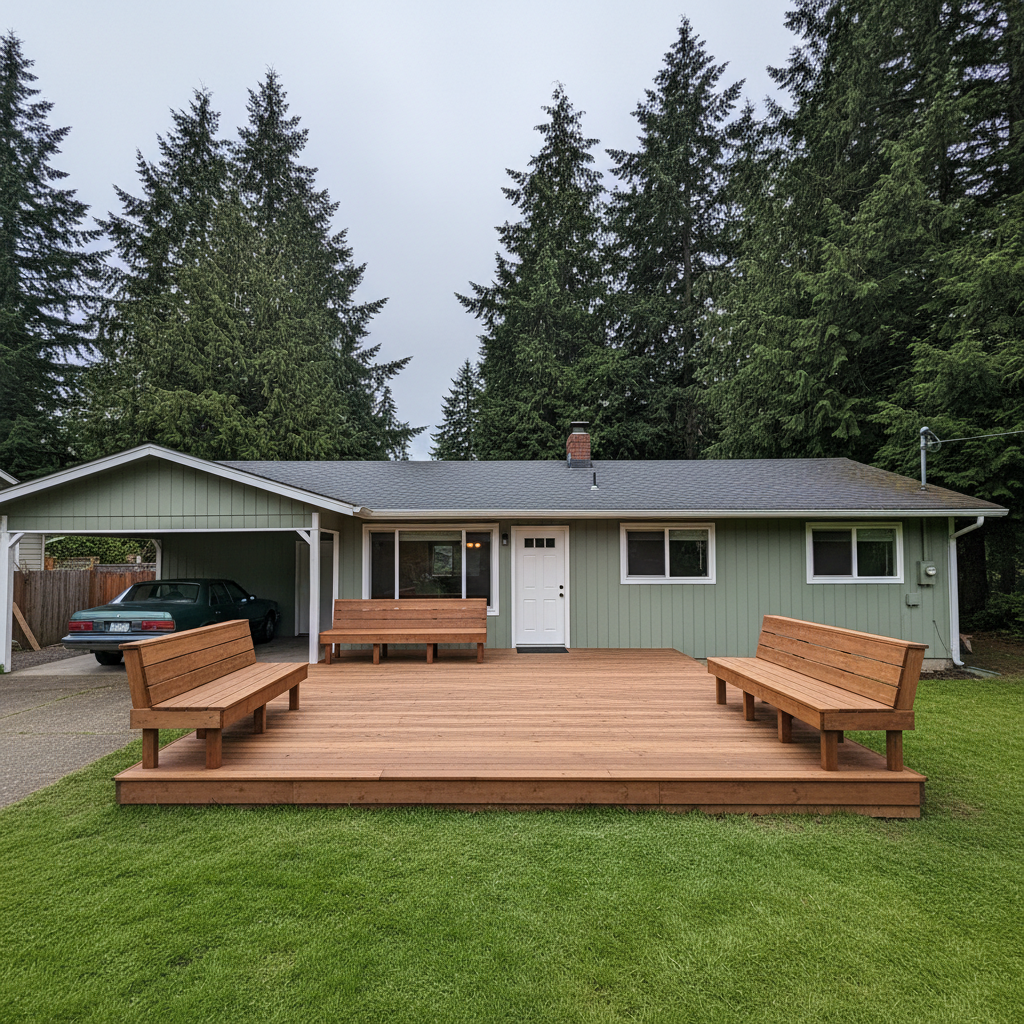
We draw up decks around how your yard actually slopes, where the sun lands in July, and whether you want a grill station or built-in bench. Multi-level layouts, curved rim joists, and inset lighting all get worked out on paper before a single post goes in the ground.
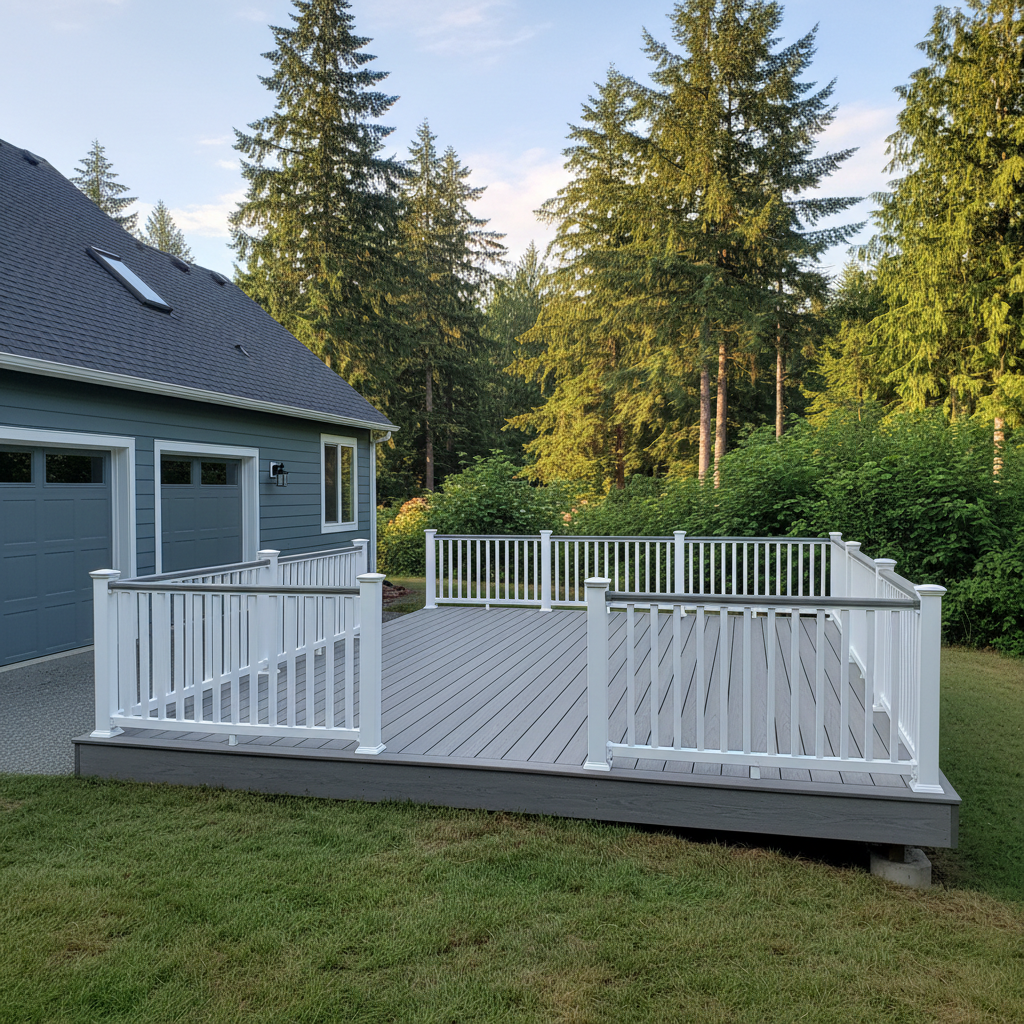
Composite boards like Trex or TimberTech don't need staining and don't splinter, which matters if you've got kids or dogs on the deck. We still frame underneath with real lumber or steel, because composite boards aren't structural on their own.
This is the part under the boards nobody sees until it fails, the joists, the beam, the post bases. We replace rusted joist hangers, add blocking where it was never installed, and resize beams that are undersized for the span they're carrying.
Washington code calls for 42-inch guardrails and baluster spacing that won't pass a 4-inch sphere, and a lot of older decks don't meet either number. We rebuild to code, not just to the height that looks right from the yard.
If the frame underneath is still sound, we can pull the old decking and replace it without rebuilding the whole structure. It's a faster, cheaper way to get rid of cupped or splintering boards when the bones of the deck are fine.
Sloped lots around Seattle often call for a deck that steps down in two or three levels instead of one tall platform off the back door. Each level needs its own footings and beam calculations, so framing takes longer, but the stairs between levels end up feeling like part of the yard instead of an afterthought.
A pergola or a solid roof over part of the deck gives you somewhere dry to stand during a Seattle drizzle. We tie the structure into the existing framing or add new posts and footings, depending on what the deck can actually support.
Four steps, and no surprises in any of them.
You tell us what you want doing, we look at what is actually there, and we ask the awkward questions early.
In writing, itemised, free. If something might add cost later we flag it now rather than at the end.
Same crew throughout. We cover your floors, keep the dust down and tidy up before we leave each day.
You point out anything you are not happy with and we fix it before the invoice, not after.
Where this list of deck work gets done.
Questions that come up once a project gets moving.
Describe the problem and we will tell you what it probably is. No obligation.